Date: 12 Sep, 2026
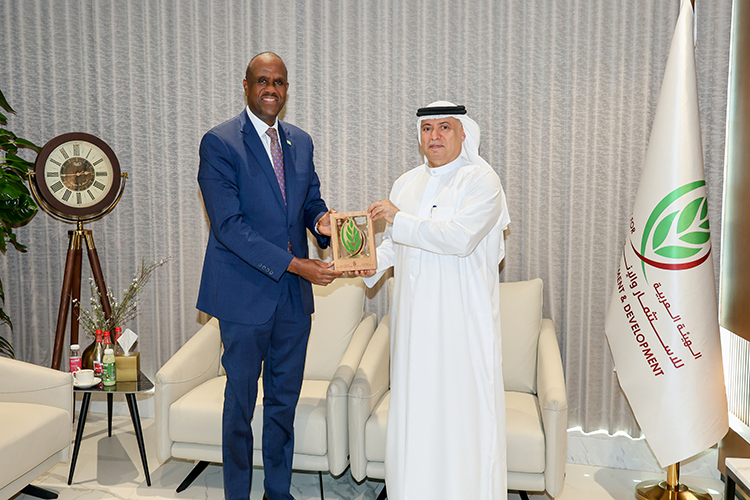
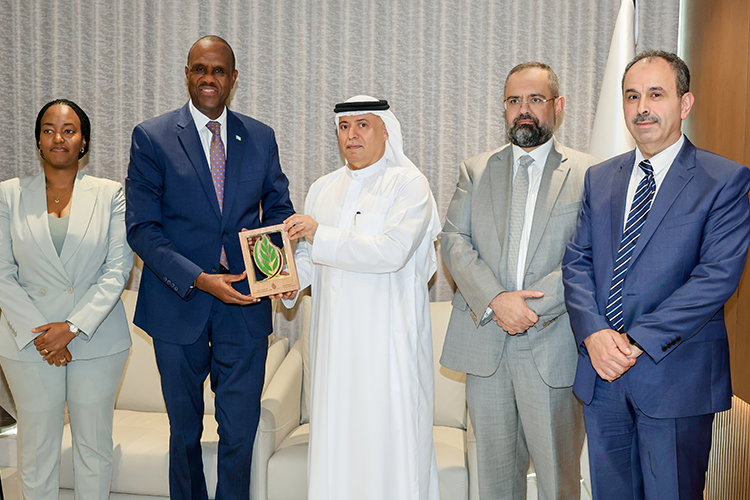
H.E. Dr. Obaid Saif Hamad Al Zaabi, Chairman of the Board of the Arab Authority for Agricultural Investment and Development (AAAID), received H.E. Ambassador John Mirenge, Ambassador of the Republic of Rwanda to the United Arab Emirates, and his accompanying delegation at AAAID’s main office.
During the meeting, the two sides discussed ways to strengthen cooperation and exchange expertise in the areas of agricultural investment, food security and sustainable development. They also reviewed a number of issues related to advancing the agricultural and food sectors, enhancing value-chain efficiency and supporting sustainable food systems, while exploring areas of mutual interest.
The Rwandan side also presented a number of investment opportunities and projects in Rwanda’s agricultural and food sectors, enabling the Authority to review and assess them in line with its mandate and strategic priorities.
H.E. Dr. Obaid Saif Hamad Al Zaabi underscored the importance of strengthening channels of dialogue and cooperation with international institutions and entities engaged in food security and agricultural development. He noted that the growing challenges facing food systems require broader partnerships, greater exchange of expertise and stronger engagement with successful international experiences, alongside the development of integrated investment approaches that combine economic viability, development impact and sustainability.
He added that, in its role as a specialized Arab financial and investment institution, AAAID focuses on leveraging its expertise and partnerships to support food security and promote investment across the agricultural and food sectors and their related value chains in Arab countries, while continuing to draw on relevant international expertise and experiences in support of its strategic objectives and priorities.
For his part, H.E. Ambassador John Mirenge expressed his appreciation for AAAID’s role and expertise in food security investment, emphasizing the importance of strengthening institutional engagement, exchanging expertise and exploring potential areas of cooperation that could help build stronger ties between the two sides.
The two sides agreed to maintain communication and coordination on the issues discussed and to exchange relevant information on proposed opportunities and initiatives, allowing potential areas of cooperation to be assessed systematically and in line with the respective mandates and priorities of both parties.