Date: 31 Oct, 2026
Location: Tunisia - Republic of Tunisia
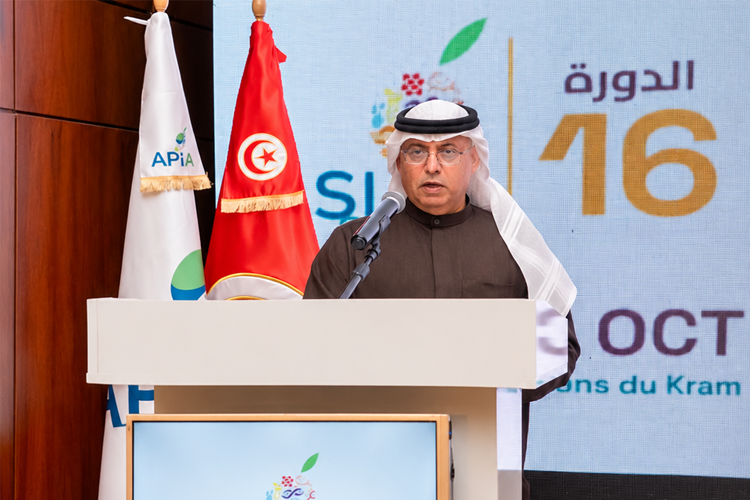
H.E. Dr. Obaid Saif Hamad Al Zaabi, Chairman of the Board of the Arab Authority for Agricultural Investment and Development (AAAID), accompanied by a delegation from AAAID’S, participated in the 16th edition of the International Exhibition of Agricultural Investment and Technology (SIAT 2026), held in the Republic of Tunisia from 28 to 31 October 2026 at the Kram Exhibition and Convention Centre.
The event brought together institutions, companies and investors from Tunisia and 11 other countries, providing a platform for engagement among stakeholders in agricultural investment, technology, agribusiness and food production.
AAAID’s participation formed part of its broader efforts to strengthen its engagement in regional and international investment platforms, expand partnerships with government institutions, financial entities and the private sector, and identify new investment opportunities across agriculture, food production and related value chains.
Organised by Tunisia’s Agricultural Investment Promotion Agency (APIA) under the theme “Investing in Resilient and Smart Agriculture to Build Food Sovereignty,” SIAT 2026 featured 155 exhibitors, alongside national and international institutions, companies specialising in agricultural technologies and equipment, agri-food industries, research organisations and investment support institutions.
Memorandum of Understanding to Strengthen Investment Cooperation
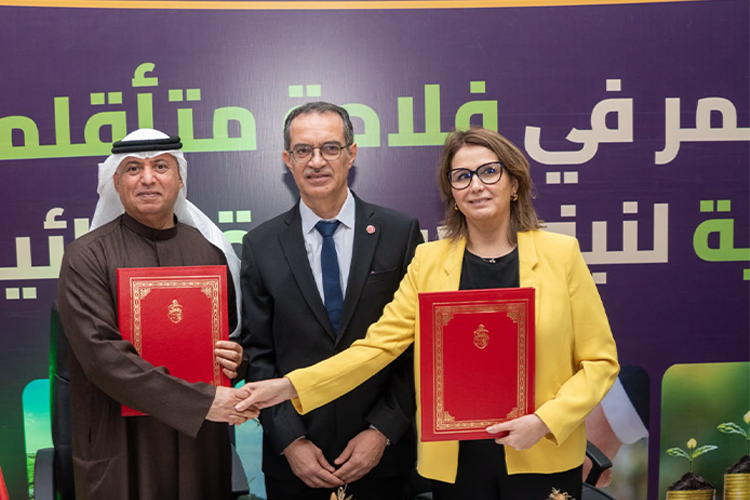
As part of the exhibition’s programme, AAAID and Tunisia’s Agricultural Investment Promotion Agency (APIA) signed a Memorandum of Understanding (MoU) during the Agricultural Partnership Forum held on 30 October. The signing took place in the presence of H.E. Mr. Ezzeddine Ben Cheikh, Tunisia’s Minister of Agriculture, Water Resources and Fisheries, together with senior officials, representatives of institutions and investors.
The MoU establishes a framework for institutional and investment cooperation between the two parties. Its areas of cooperation include strengthening the exchange of information and expertise, promoting agricultural investment opportunities and projects in Tunisia and Arab countries, developing joint approaches to project development and investment mobilisation, and encouraging Tunisian investors to participate in AAAID’s investment projects across the Arab region.
The agreement also provides for cooperation in digital transformation and the development of agricultural platforms, exploring appropriate financing mechanisms for small and medium-sized agricultural projects, and sharing expertise and best practices in agricultural and agri-food investment.
Addressing the forum, H.E. Dr. Obaid Saif Hamad Al Zaabi highlighted AAAID’s five-decade track record and its role in deploying investment to advance food security across the Arab region.
He noted that, as the Authority marks its 50th anniversary, it is entering a new phase of institutional development under its new corporate identity, the Arab Authority for Investment and Food Security (MAYR), which reflects its central mission of mobilising investment in support of Arab food security.
Dr. Al Zaabi highlighted that AAAID holds equity stakes in more than 40 agricultural and food companies across more than 10 Arab countries, supporting approximately 107,000 permanent and seasonal jobs.
He emphasised that the Authority’s investment model extends beyond financial participation to encompass project preparation, structuring and governance development, in collaboration with experienced operating partners. This integrated approach strengthens the capacity of projects to attract additional investment and generate broader economic and development impact.
He further noted that, according to the Authority’s estimates, every US dollar committed by AAAID attracts between six and seven US dollars in partner investment, underscoring its role in mobilising capital and broadening private-sector participation in agricultural and food-related projects.
H.E. Dr. Al Zaabi described the MoU as a step towards establishing a practical framework for cooperation based on identifying investment opportunities, preparing bankable projects, expanding investor participation and exploring appropriate financing mechanisms. He stressed the importance of translating institutional frameworks into tangible partnerships and investment projects.
High-Level Discussions to Expand Investment and Strengthen Partnership with Tunisia
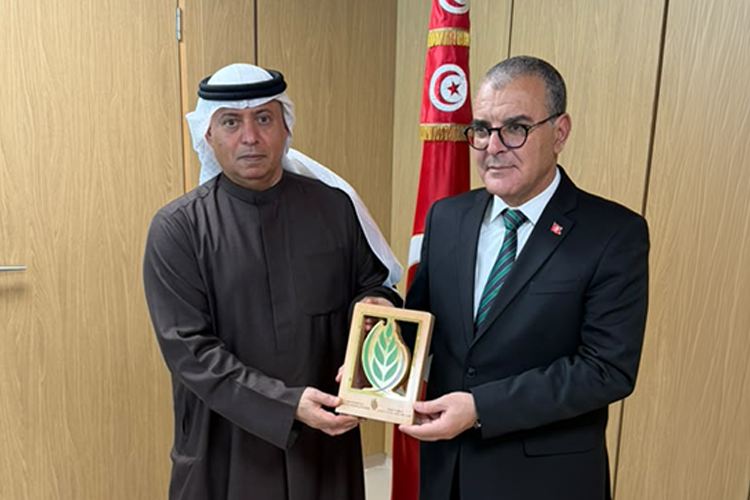
On the sidelines of the visit, H.E. Dr. Obaid Saif Hamad Al Zaabi met with H.E. Dr. Samir Abdelhafidh, Tunisia’s Minister of Economy and Planning, to discuss ways to strengthen existing cooperation and explore new avenues for investment partnership between AAAID and Tunisia.
The discussions focused on opportunities to expand the Authority’s activities and investments in Tunisia, and on enhancing access to the financial and technical mechanisms available through AAAID to support investment projects. The meeting also explored opportunities to broaden the participation of both the public and private sectors in developing projects of mutual interest.
Both sides reaffirmed their commitment to building on existing relations and expanding areas of cooperation in support of national development priorities and food security.
The Tunisian side highlighted the importance of the agricultural sector within the country’s development programmes for the upcoming five-year period. For his part, Dr. Al Zaabi expressed satisfaction with the progress of AAAID’s existing projects in Tunisia and reaffirmed the Authority’s readiness to consider proposals for new projects and work with local partners to develop additional investment opportunities.
In a separate meeting, H.E. Dr. Al Zaabi met with H.E. Mr. Ezzeddine Ben Cheikh, Tunisia’s Minister of Agriculture, Water Resources and Fisheries, in the presence of H.E. Mr. Cheikhou Oumar Ba, Senegal’s Minister of Agriculture, Food Sovereignty and Livestock, and the Director General of APIA.
The meeting focused on strengthening cooperation and developing investment partnerships across agricultural and agri-food sectors, while exploring new opportunities to enhance production, develop value chains and contribute to food security.
Exploring Cooperation Opportunities and Knowledge Exchange
The visit also included a tour of the exhibition, during which the AAAID Chairman and accompanying delegation reviewed the latest technologies and solutions aimed at improving agricultural productivity, strengthening supply chain efficiency and advancing food processing.
The delegation also visited the pavilion of the Food and Agriculture Organization of the United Nations (FAO), where opportunities for cooperation in responsible agricultural investment were discussed. The delegation further visited the pavilion of Mabrouka Seeds Company to learn about its activities and solutions in seeds and agricultural technologies.
AAAID’s participation in SIAT 2026 builds on its established investment partnerships in Tunisia, notably its investment in Al Marjâ Livestock and Agricultural Development Company, which recorded milk production of approximately 13.8 million litres during the latest production season.
In addition, the Authority is undertaking an economic feasibility assessment for a new investment project in Tunisia and developing a pipeline of potential investment opportunities in cooperation with local investors and partners.
AAAID is also exploring areas of cooperation under its proposed Small Farmers and Fishers Fund, which is being developed in technical partnership with the Food and Agriculture Organization of the United Nations (FAO). The initiative aims to expand investment opportunities supporting small-scale producers and strengthen their participation in agricultural and food value chains.
AAAID’s participation in SIAT 2026 reflects its continued commitment to expanding investment partnerships across the Arab region and Africa, mobilising capital towards viable investment opportunities, and developing projects that generate financial returns alongside sustainable development impact. Through these efforts, the Authority seeks to strengthen value-chain integration and contribute to advancing food security across the region.



