Date: 30 Sep, 2026
Location: New York - USA
The Arab Authority for Agricultural Investment and Development (AAAID) participated in the High-Level Ministerial Majlis and Implementation Dialogue, “From Water Stress to Implementation: Building Country Pathways for Water-Secure Agriculture,” hosted by the United Arab Emirates at its Permanent Mission to the United Nations in New York, on the margins of the 81st session of the United Nations General Assembly. The high-level dialogue brought together ministers, senior government officials, representatives of international financial and development institutions, and leading experts.
The Majlis was chaired by Her Excellency Dr. Amna bint Abdullah Al Dahak, Minister of Climate Change and Environment of the United Arab Emirates, and focused on the growing importance of water security as a foundation for agricultural production, food security, sustainable economic growth, and the resilience of communities and economies in the face of climate pressures.
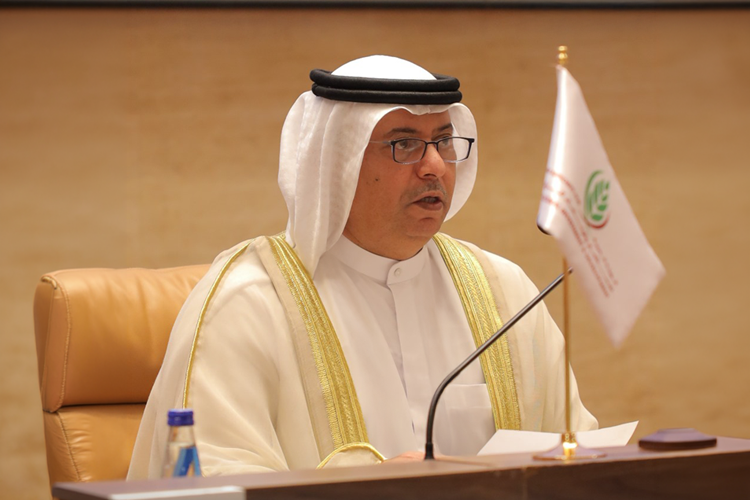
AAAID was represented by H.E. Dr. Obaid Saif Hamad Al Zaabi, Chairman of the Board of AAAID, who presented the Authority’s investment perspective on the role of finance and investment in translating water-secure agriculture solutions into bankable projects capable of delivering sustainable economic and development impact. The official AAAID profile confirms Dr. Al Zaabi’s role as Chairman of the Board.
Dr. Al Zaabi noted that, from an investment perspective, the challenge is not always a lack of financing or solutions, but often a gap in preparing projects to become bankable and investable. He highlighted the importance of strengthening feasibility studies, ensuring reliable data on water resources, developing robust financial models, clearly identifying and allocating risks, and ensuring the availability of capable implementation and operating partners.
He stressed that water-related agricultural projects need to move beyond technical solutions towards sustainable business models that demonstrate the sustainability and effective management of water resources, the suitability of technologies to local conditions, and clear revenue, cost, repayment, risk and return structures.
He also underscored the importance of investment and development institutions engaging earlier in the project cycle, including through feasibility studies and technical preparation, financial modelling, public-private partnership structuring, and risk allocation, alongside the use of guarantees, blended finance and concessional financing. Such approaches can help translate national priorities into bankable investment opportunities and mobilise greater volumes of private capital.
Dr. Al Zaabi highlighted promising areas for public-private partnerships, including modern irrigation, water reuse, digital water management, renewable energy, controlled-environment agriculture, and smart agricultural technologies. He emphasised that the long-term success of such projects depends on economically sustainable business models that support efficient operations and maintenance, cost recovery and continuity of services.
He further stressed the importance of treating water security and food security as an interconnected investment system, with agricultural investments designed to simultaneously enhance productivity, improve the efficient use of water and other resources, and generate sustainable economic returns.
In this context, Dr. Al Zaabi highlighted the role regional investment institutions can play in bridging countries, finance and markets by aggregating projects into bankable investment portfolios, supporting pilot projects, connecting governments with investors, and deploying blended finance and guarantee instruments to mobilise additional private capital.
He also outlined AAAID’s direction towards strengthening its role as an investment catalyst and long-term partnership builder, alongside its role as a direct investor, with a focus on investments capable of delivering measurable outcomes in water savings, productivity, production efficiency, farmer incomes and long-term economic sustainability.
The High-Level Ministerial Majlis brought together H.E. Dr. Amna bint Abdullah Al Dahak Al Shamsi, Minister of Climate Change and Environment of the United Arab Emirates and Chair of the Majlis; H.E. Dr. Maina Vakafua Talia, Minister for Home Affairs, Climate Change and Environment of Tuvalu; H.E. Dr. Alyo Gory Diouf, Minister of Environment and Ecological Transition of Senegal; Dr. Qu Dongyu, Director-General of the Food and Agriculture Organization of the United Nations (FAO); H.E. Dr. Tarifa Al Zaabi, Director General of the International Center for Biosaline Agriculture (ICBA); Dr. Nawal Al-Hosni, Permanent Representative of the United Arab Emirates to the International Renewable Energy Agency (IRENA); Federica Diamanti, Assistant Vice President for External Relations at the International Fund for Agricultural Development (IFAD); Ibrahim Cheikh Diong, Executive Director of the Fund for Responding to Loss and Damage; and Marco Rago, Adviser to the Deputy Prime Minister and Minister of Foreign Affairs and International Cooperation of Italy.
AAAID’s participation in the Majlis forms part of its broader efforts to strengthen the role of investment, finance and partnerships in advancing water and food security, and to contribute to international dialogue on developing agricultural projects that use water more efficiently and are capable of being financed and scaled. These efforts support the development of more productive, sustainable and resilient food systems across the Arab region.